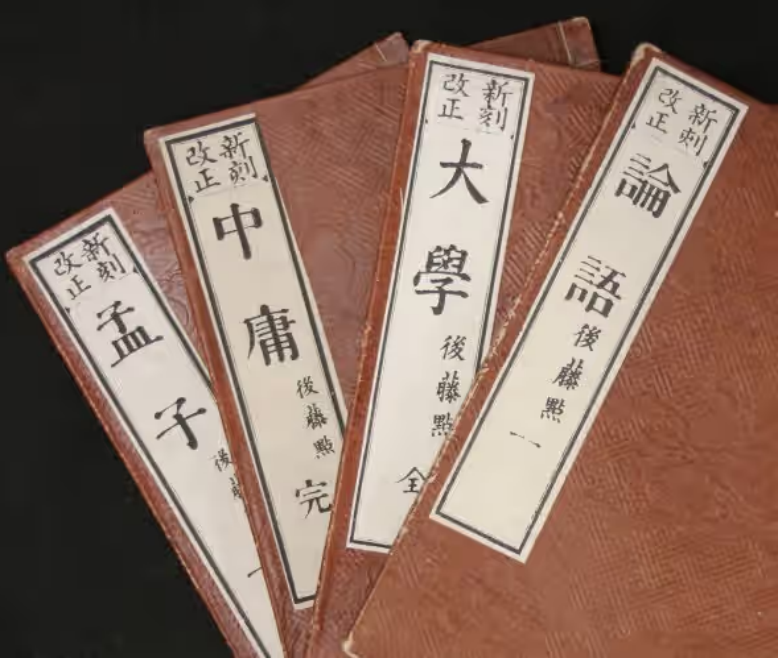
The Four Books
Overview
The Four Books is a term that refers to the classic texts of Confucianism extensively studied and revered in Chinese culture, particularly during the Song Dynasty (960-1279) and beyond. These texts include The Great Learning, The Doctrine of the Mean, The Analects of Confucius, and The Works of Mencius. The Four Books were selected by the neo-Confucian Zhu Xi during the Song dynasty as a foundational introduction to Confucianism. Examinations for the state civil service in China came to follow his lead.
The Great Learning
This work is attributed to one of Confucius' disciples, Zengzi, focusing on the importance of moral development and education. It elucidates the path to personal and social harmony by detailing processes of knowledge accumulation and ethical cultivation.
The Doctrine of the Mean
It emphasizes the virtue of moderation and the necessity of harmony and balance in one’s life and governance.
The Analects of Confucius
A collection of sayings and ideas attributed to the Chinese philosopher Confucius and his contemporaries, this text emphasizes moral conduct, the propriety of the ruler, and the well-being of the family. It is a seminal work for understanding Confucian thought, capturing dialogues between Confucius and his disciples.
The Works of Mencius
This text comprises dialogues and discussions of Mencius, a key Confucian thinker who expanded on Confucius’ teachings. Mencius emphasized the innate goodness of human nature and the importance of moral and righteous leadership.
Cultural Influence and Global Reach
Beyond the traditional Confucian sphere, The Four Books concept extends to other literary and cultural influences. For instance, translations and adaptations of Chinese classics have spread internationally, enhancing cultural exchanges. The Confucian classics, in particular, have resonated widely, influencing philosophical thoughts in both Eastern and Western contexts.
Translations and Adaptations
Various translators and scholars have aimed to bridge cultural gaps by translating these classics into numerous languages. For example, Sinologists like Roger T. Ames have emphasized translating Confucian works to showcase Chinese philosophy's richness and relevance. Initiatives like these illustrate the timeless nature of these classics and their adaptability to modern contexts.
Literary and Academic Significance
The Four Books have not only contributed to the philosophical and educational landscape in China but also provided a framework for governance, ethical behavior, and personal development across diverse cultures. They are studied both for their historical significance and their contemporary applications in understanding human and governmental conduct.
Modern Interpretations and Cultural Exchange
The Four Books have been part of broader cultural exchange initiatives. They serve as a testament to the enduring legacy of Chinese philosophical thought. Various cultural projects aim to introduce these texts to younger generations globally, ensuring their principles continue to influence modern educational and ethical paradigms.
Educational Initiatives
Educational publishers have sought to present these ancient teachings in an accessible manner to younger audiences. For instance, initiatives to simplify and adapt the teachings of Confucius and Mencius for global youth audiences aim to provide insights into foundational Chinese wisdom that is applicable today.
Cross-Cultural Dialogues
The presence of Confucian statues and other cultural exchanges across the globe highlights an increasing dialogue between Chinese culture and global philosophical traditions, emphasizing mutual understanding and respect among different civilizations. Article reference1. Book highlights philosopher's thoughts. chinadaily.com.cn. 20202. Sinologist wants China to grow confident. chinadaily.com.cn. 2017Photo Gallery(1 picture)CategoriesChinese PhilosophyTagConfucianismClassics of Chinese StudiesRelatedThe Great LearningThe Doctrine of the MeanZhu XiCatalogue1. Overview2. Cultural Influence and Global Reach3. Modern Interpretations and Cultural Exchange- - - []








